

Objectives of Business
Introduction
Every business is started with certain objectives or goals. These objectives guide business decisions, policies, and activities. In the early days, businesses mainly focused on profit earning, but in the modern business environment, organisations also focus on growth, sustainability, and social responsibility.
The major objectives of business include:
-
Profit Objective
-
Growth Objective
-
Sustainability Objective
-
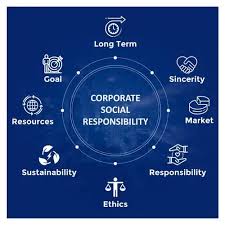
Corporate Social Responsibility (CSR)
Each objective plays an important role in ensuring the success, stability, and long-term survival of a business.
1. Profit Objective
Meaning of Profit
Profit is the difference between total revenue (income) and total cost (expenses) of a business.
Profit = Total Revenue – Total Cost\text{Profit = Total Revenue – Total Cost}
Profit is the primary objective of any business organisation because without profit, a business cannot exist for a long time.
Why Profit is Important?
1. Survival of Business
Profit is essential for the survival of a business.
A business that continuously makes losses will eventually shut down.
-
Profit helps pay salaries, rent, taxes, and other expenses
-
Without profit, operations cannot continue
Without profit, business has no future
2. Growth and Expansion
Profit provides funds for business growth and expansion.
With profit, a business can:
-
Open new branches
-
Purchase new machines or technology
-
Develop new products
-
Enter new markets
Growth is impossible without sufficient profit.
3. Reward to Owners
Business owners invest capital, time, and effort and take risks.
Profit is the reward for these efforts.
-
Encourages entrepreneurship
-
Motivates owners to take risks
-
Attracts new investors
4. Future Planning and Security
Profit helps businesses prepare for:
-
Unexpected losses
-
Economic downturns
-
Emergencies
-
Market uncertainties
Businesses create reserves and savings from profits for future use.
Example of Profit Objective
A company buys mobile accessories for ₹100 each and sells them for ₹150.
Profit = ₹150 – ₹100 = ₹50 per unit\text{Profit = ₹150 – ₹100 = ₹50 per unit}
This profit can be used for:
-
Paying expenses
-
Expanding business
-
Saving for future risks
Limitations of Profit-Only Objective
-
Excessive profit focus may exploit customers
-
Can harm environment
-
May ignore employee welfare
-
Leads to unethical practices
Therefore, modern businesses balance profit with social responsibility.
2. Growth Objective
Meaning of Growth Objective
Business growth refers to an increase in:
-
Sales
-
Customers
-
Employees
-
Market share
-
Branches
-
Products or services
Growth shows that the business is successful, competitive, and stable.
Why Growth is Important?
1. Competitive Strength
Growing businesses can:
-
Compete better with rivals
-
Offer better quality and prices
-
Adopt new technology faster
Large businesses enjoy economies of scale, reducing cost per unit.
2. Increase in Revenue
Growth leads to:
-
More customers
-
Higher sales
-
Increased income
This strengthens the financial position of the business.
3. Better Market Reputation
A growing business:
-
Gains public trust
-
Attracts customers and employees
-
Builds strong brand image
People prefer companies that show progress and stability.
4. Long-Term Stability
Growth helps businesses:
-
Survive competition
-
Handle market changes
-
Face economic fluctuations
Stagnant businesses risk failure.
Example of Growth Objective
A clothing shop starts with one store.
Due to good quality and customer satisfaction, it opens five more branches in different cities.
This shows:
-
Increase in sales
-
Expansion of market
-
Achievement of growth objective
Methods to Achieve Growth
-
Introducing new products
-
Expanding to new locations
-
Using digital marketing
-
Improving customer service
-
Strategic partnerships
3. Sustainability Objective
Meaning of Sustainability
Sustainability means running a business in a way that:
-
Protects the environment
-
Uses resources responsibly
-
Ensures long-term business continuity
It focuses on meeting present needs without harming future generations.
Importance of Sustainability in Business
Modern businesses understand that:
-
Natural resources are limited
-
Environmental damage affects society
-
Sustainable businesses last longer
Sustainability helps businesses balance profit, people, and planet.
Key Areas of Sustainability
1. Environmental Care
Businesses should:
-
Reduce pollution
-
Control waste
-
Use eco-friendly materials
-
Reduce carbon emissions
This protects nature and improves public image.
2. Efficient Use of Resources
Sustainable businesses focus on:
-
Saving electricity
-
Conserving water
-
Reducing raw material wastage
-
Recycling and reuse
This reduces cost and environmental damage.
3. Long-Term Planning
Sustainability encourages:
-
Long-term investment decisions
-
Responsible production
-
Ethical sourcing of materials
This ensures business continuity.
Example of Sustainability Objective
A company installs solar panels in its office building.
Benefits:
-
Reduces electricity bills
-
Uses renewable energy
-
Reduces pollution
-
Supports long-term sustainability
Advantages of Sustainability
-
Cost savings in the long run
-
Positive brand image
-
Customer trust
-
Compliance with environmental laws
-
Better future security
4. Corporate Social Responsibility (CSR)
Meaning of CSR
Corporate Social Responsibility (CSR) means the responsibility of a business to contribute to the welfare of society, environment, and community beyond profit-making.
CSR reflects the idea that businesses should act as responsible corporate citizens.
Why CSR is Needed?
1. Good Image and Reputation
CSR activities:
-
Build public trust
-
Improve brand value
-
Create positive public perception
Customers prefer socially responsible companies.
2. Support to Society
CSR helps:
-
Improve education
-
Provide healthcare
-
Protect environment
-
Support poor and needy communities
Businesses give back to the society from which they earn.
3. Government Encouragement
In many countries (including India):
-
CSR is encouraged or mandatory for large companies
-
Legal frameworks guide CSR spending
This ensures ethical business practices.
Common CSR Activities
-
Free education programs
-
Tree plantation drives
-
Blood donation camps
-
Scholarships for poor students
-
Cleanliness and sanitation drives
-
Skill development programs
Example of CSR Activity
A company distributes:
-
School bags
-
Books
-
Uniforms
to underprivileged children in rural areas.
This improves:
-
Education
-
Social development
-
Company’s goodwill
Benefits of CSR
-
Strong relationship with society
-
Employee satisfaction
-
Customer loyalty
-
Sustainable business growth
-
Reduced conflicts with communities
Summary Table
|
Objective |
Meaning |
Why Important? |
Easy Example |
|
Profit |
Earn more than expenses |
Survival & rewards |
Selling goods at a higher price |
|
Growth |
Becoming bigger and better |
Market strength |
Opening new branches |
|
Sustainability |
Eco-friendly operations |
Protect future |
Using solar power |
|
CSR |
Serving society |
Good image |
Planting trees |