
Business Environment
Introduction
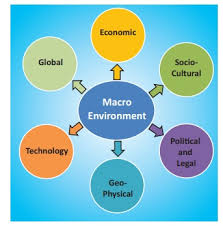
Every business does not operate in isolation. It functions within a surrounding known as the business environment. This environment includes all external forces and factors that influence business decisions, performance, growth, and survival. These forces may be economic, legal, technological, or socio-cultural in nature.
The business environment is dynamic, meaning it keeps changing. A successful business must understand these changes and adapt accordingly. Ignoring environmental factors can lead to poor decisions, losses, or even business failure.
Meaning of Business Environment
The business environment refers to all external conditions, influences, and forces that affect the functioning, decision-making, and performance of a business enterprise.
Definition
“Business environment consists of all those external forces that affect the operations and performance of a business.”
These forces are generally beyond the control of business, but businesses must continuously monitor and respond to them.
Importance of Business Environment
Understanding the business environment helps an organisation to:
-
Identify opportunities and threats
-
Formulate effective strategies
-
Plan future growth
-
Avoid legal problems
-
Meet customer expectations
-
Remain competitive
Types of Business Environment
The business environment is broadly classified into:
-
Economic Environment
-
Legal Environment
-
Technological Environment
-
Socio-Cultural Environment
Each type plays a crucial role in shaping business activities.
1. Economic Environment
Meaning
The economic environment refers to all economic factors that influence business operations, profitability, and consumer purchasing power. These factors decide how much people can spend and how businesses can operate.
Economic conditions directly affect:
-
Demand and supply
-
Production level
-
Pricing decisions
-
Investment plans
Key Elements of Economic Environment
1. Income Levels of People
-
Higher income → higher purchasing power
-
Lower income → reduced demand
Businesses adjust product pricing and quality based on income levels.
Example:
When people earn more, demand for branded clothes, electronic gadgets, and travel services increases.
2. Employment Rate
-
High employment → stable income → higher spending
-
Unemployment → reduced demand
Businesses suffer when unemployment rises.
Example:
During economic slowdown, job losses reduce sales of cars and luxury goods.
3. Inflation and Price Levels
Inflation means a continuous rise in prices.
Effects on business:
-
Increase in production cost
-
Reduced purchasing power
-
Lower demand
Example:
If inflation rises, customers buy fewer non-essential items, reducing business sales.
4. Economic Policies
Government policies strongly influence business activities.
Includes:
-
Budget policies
-
Taxation
-
Interest rates
-
Monetary policy
-
Fiscal policy
Example:
Lower interest rates encourage businesses to borrow and invest.
5. Economic Growth of the Country
A growing economy creates:
-
More jobs
-
Higher income
-
Better business opportunities
A slow economy reduces demand and profits.
Importance of Economic Environment for Business
-
Helps in pricing decisions
-
Guides investment planning
-
Helps forecast demand
-
Supports long-term strategy
Example of Economic Environment Impact
If inflation increases sharply:
-
Prices rise
-
Consumers reduce spending
-
Businesses experience lower sales
-
Profits decline
2. Legal Environment
Meaning
The legal environment includes all laws, rules, regulations, court judgments, and government policies that regulate business activities. Businesses must strictly follow these laws to operate legally.
Failure to comply can lead to:
-
Penalties
-
Fines
-
Legal action
-
Business closure

Key Elements of Legal Environment
1. Consumer Protection Laws
These laws protect consumers from:
-
Fraud
-
Unfair trade practices
-
Defective products
Example:
Companies must provide correct product information and fair pricing.
2. Labour Laws
Labour laws protect employees’ rights.
Includes:
-
Minimum wages
-
Working hours
-
Safety standards
-
Employee benefits
Example:
Employers must pay wages as per labour laws.
3. Environmental Laws
Businesses must protect the environment.
Includes:
-
Pollution control laws
-
Waste management rules
-
Environmental clearance
Example:
Factories must treat waste before disposal.
4. Company Laws
These laws govern:
-
Formation of companies
-
Management
-
Accounts and audits
-
Shareholder rights
Example:
Companies must follow the Companies Act for registration and reporting.
5. Taxation Laws
Includes:
-
Income tax
-
GST
-
Customs duty
Businesses must file returns on time.
Example:
A business must pay GST and submit returns regularly.
Importance of Legal Environment
-
Ensures fair business practices
-
Protects consumers and workers
-
Maintains discipline in business
-
Builds trust in the market
Example of Legal Environment Impact
A business failing to follow tax laws may face:
-
Heavy penalties
-
Legal notices
-
Loss of reputation
3. Technological Environment
Meaning
The technological environment refers to the level of technology, innovations, inventions, and scientific advancements that influence business operations and productivity.
Technology changes how businesses:
-
Produce goods
-
Market products
-
Communicate with customers
-
Deliver services

Key Elements of Technological Environment
1. New Machines and Equipment
Advanced machines improve:
-
Speed
-
Quality
-
Efficiency
Example:
Automated machines increase production capacity.
2. Digital Payments and Online Platforms
Technology has enabled:
-
Online payments
-
E-commerce
-
Mobile banking
Example:
Customers pay using UPI, cards, or mobile apps.
3. Automation
Automation reduces human effort and errors.
Benefits:
-
Lower cost
-
Faster production
-
Better accuracy
Example:
Factories use automated assembly lines.
4. Artificial Intelligence (AI)
AI helps in:
-
Customer service
-
Data analysis
-
Decision-making
Example:
Chatbots answer customer queries online.
5. Digital Marketing
Businesses promote products through:
-
Social media
-
Websites
-
Online advertisements
Example:
Companies advertise on Instagram and Google.
Importance of Technological Environment
-
Improves productivity
-
Reduces cost
-
Enhances quality
-
Increases competitiveness
-
Improves customer satisfaction
Example of Technological Environment Impact
Businesses that adopt technology grow faster, while those ignoring technology lose customers.
4. Socio-Cultural Environment
Meaning
The socio-cultural environment includes the values, beliefs, traditions, customs, lifestyle, education level, and social attitudes of people in a society.
It strongly influences:
-
Consumer behavior
-
Product demand
-
Marketing strategies
Key Elements of Socio-Cultural Environment
1. Tastes and Preferences
Consumer preferences change over time.
Example:
Demand for organic and healthy food is increasing.
2. Culture and Traditions
Culture influences:
-
Food habits
-
Clothing choices
-
Festivals
Example:
Traditional wear sales increase during festivals.
3. Family Structure
Changes from joint to nuclear families affect consumption.
Example:
More demand for ready-to-cook food.
4. Education Level
Higher education leads to:
-
Awareness
-
Demand for quality products
Example:
Educated consumers prefer branded products.
5. Changing Lifestyle
Urban lifestyle increases demand for:
-
Convenience products
-
Online services
Example:
Growth of online food delivery services.
Importance of Socio-Cultural Environment
-
Helps design suitable products
-
Guides marketing strategies
-
Improves customer satisfaction
-
Supports long-term success
Example of Socio-Cultural Impact
As people become health-conscious:
-
Demand for sugar-free products rises
-
Businesses change product offerings
Summary Table
|
Environment |
Meaning |
Examples |
Importance |
|
Economic |
Financial conditions affecting business |
Inflation, income levels |
Helps plan pricing & investment |
|
Legal |
Laws & rules governing business |
GST, labor laws |
Ensures legal & safe operations |
|
Technological |
Use of new technology |
Automation, AI, drones |
Improves efficiency & competitiveness |
|
Socio-Cultural |
Social values and customer behavior |
Lifestyle, traditions |
Helps design suitable products |