
DECISION-MAKING AND STRATEGIC PLANNING IN SERVICE INDUSTRIES
1. Decision-Making in Service Industries
1.1 Meaning of Decision-Making
Decision-making is the process of identifying a problem, analysing possible alternatives, and selecting the most suitable course of action to achieve organisational objectives. It is one of the most important managerial functions because every activity of an organisation depends on the quality of decisions taken.
In service industries, decision-making is more complex than in manufacturing industries because services are intangible, cannot be stored, and are produced and consumed at the same time. Decisions taken by managers and frontline employees directly influence customer satisfaction, service quality, company image, and profitability.
For example, a wrong decision in a hotel regarding room allocation or a delayed decision in an airline during a flight disruption can immediately affect customer experience and brand reputation.
Importance of Decision-Making in Service Industries
Decision-making plays a crucial role in ensuring smooth operations and high service standards. Since customers interact directly with service employees, even small decisions can have a big impact.
-
Helps in improving service quality
-
Ensures customer satisfaction and loyalty
-
Reduces operational problems and delays
-
Improves efficiency and productivity
-
Supports achievement of organisational goals
1.2 Characteristics of Decision-Making in the Service Sector
Decision-making in service industries has some unique characteristics due to the nature of services.
1. Customer-Oriented Nature
Services are customer-focused, and decisions are taken keeping customer needs, comfort, and satisfaction in mind. Since customers are present during service delivery, their expectations influence decisions.
Example:
An airline deciding to provide free rescheduling during bad weather focuses on customer convenience rather than only profit.
2. Time-Sensitive Decisions
Service decisions often need to be taken quickly, as delays can reduce service quality.
Examples:
-
Flight delay management at airports
-
Emergency treatment decisions in hospitals
-
Handling guest complaints at hotel reception
Delay in decision-making can result in customer dissatisfaction and loss of goodwill.
3. High Human Involvement
Service industries depend heavily on people. Employees such as cabin crew, nurses, front-desk executives, and call-center staff take daily decisions that affect service delivery.
Example:
A customer care executive deciding how to resolve a complaint can either retain or lose a customer.
4. Intangibility of Services
Since services cannot be seen, touched, or stored, managers must ensure consistent service quality through correct decisions.
Example:
A hospital must decide staff duty schedules carefully to avoid long waiting times for patients.
5. High Competition
Service industries face intense competition. Organisations must take smart and innovative decisions to differentiate themselves.
Example:
Hotels offering personalized services or airlines providing loyalty programs to attract customers.
Summary: Characteristics of Service Decision-Making
-
Customer-focused
-
Immediate and time-bound
-
People-oriented
-
Quality-sensitive
-
Competition-driven
1.3 Types of Decisions in Service Industries
Decision-making in service organisations is classified into three levels based on time horizon and authority.
A. Strategic Decisions
Meaning
Strategic decisions are long-term decisions taken by top-level management. These decisions define the overall direction, policies, and future growth of the organisation. They usually cover a period of 3 to 5 years or more.
Characteristics
-
Long-term impact
-
High risk and uncertainty
-
Taken by Board of Directors / CEOs
-
Affect the entire organisation
Examples in Service Industries
-
Aviation:
-
Launching international routes
-
Purchasing new aircraft
-
Entering low-cost airline market
-
-
Healthcare:
-
Investing in robotic surgery
-
Opening new speciality hospitals
-
-
Banking:
-
Shifting to digital-only banking
-
Introducing AI-based customer services
-
B. Tactical Decisions
Meaning
Tactical decisions are medium-term decisions taken by middle-level management. These decisions are concerned with implementing strategic plans and policies.
Characteristics
-
Medium-term in nature
-
Department-specific
-
Support strategic decisions
Examples
-
Designing pricing packages for airline tickets
-
Recruitment and training plans in hotels
-
Selecting vendors for catering or housekeeping
-
Marketing campaigns and promotions
C. Operational Decisions
Meaning
Operational decisions are short-term, routine decisions taken by supervisors and frontline employees. These decisions are related to daily operations.
Characteristics
-
Short-term and repetitive
-
Low risk
-
Taken at lower management level
Examples
-
Handling customer complaints
-
Assigning rooms to hotel guests
-
Managing flight gate changes
-
Scheduling nurses in hospitals
1.4 Decision-Making Process in Service Industries
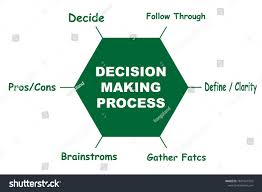
The decision-making process follows a systematic approach to ensure effective outcomes.
Step 1: Identification of the Problem
The first step is to clearly define the problem.
Example:
Long check-in queues at an airport causing passenger dissatisfaction.
Step 2: Collection of Information
Relevant data is collected from various sources such as:
-
Customer feedback
-
Employee suggestions
-
Reports and records
Example:
Passenger complaints, peak hour data, staffing reports.
Step 3: Development of Alternatives
Multiple solutions are developed to solve the problem.
Example:
-
Increase check-in counters
-
Introduce self-check-in kiosks
-
Promote online check-in
Step 4: Evaluation of Alternatives
Each alternative is evaluated based on:
-
Cost
-
Time required
-
Feasibility
-
Impact on customers
Step 5: Selection of the Best Alternative
The most suitable option is selected.
Example:
Introducing self-check-in kiosks to reduce queues.
Step 6: Implementation of the Decision
The selected alternative is put into action.
Step 7: Review and Feedback
The outcome is reviewed to check effectiveness.
Example:
Monitoring queue time reduction and passenger satisfaction.
2. Strategic Planning in Service Industries
2.1 Meaning of Strategic Planning
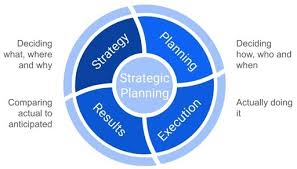
Strategic planning is a systematic and continuous process of setting long-term goals, selecting strategies to achieve them, allocating resources efficiently, and evaluating performance.
In service industries, strategic planning ensures that service quality, customer satisfaction, and operational efficiency are maintained over the long term.
It acts as a roadmap that guides the organisation toward its future vision.
2.2 Importance of Strategic Planning in Service Industries
Strategic planning is essential because service industries operate in a dynamic and competitive environment.
Importance Explained
Strategic planning helps service organisations anticipate future challenges, adapt to technological changes, and meet customer expectations. It ensures coordinated efforts among departments and avoids waste of resources.
Importance
-
Ensures long-term growth and survival
-
Improves service consistency and quality
-
Helps face competition effectively
-
Enhances customer satisfaction
-
Supports adoption of new technology
-
Improves manpower and resource planning
-
Aligns all departments toward common goals
Industry-Wise Examples of Strategic Planning
1. Aviation Industry
Decisions:
-
Ticket pricing strategies
-
Crew scheduling
-
Flight routing
Strategies:
-
Fleet expansion
-
Digital boarding passes
-
Frequent flyer loyalty programs
-
Sustainable aviation practices
2. Hotel Industry
Decisions:
-
Room pricing and discounts
-
Housekeeping schedules
Strategies:
-
Opening new branches
-
Online booking systems
-
Personalized guest services
-
Luxury and eco-friendly hotels
3. Healthcare Industry
Decisions:
-
Patient prioritisation
-
Staff allocation
Strategies:
-
Telemedicine adoption
-
Adding new speciality units
-
Digital health records
-
Patient-centric care models