
History of Aviation and Commercial Air Transport
Introduction
The history of aviation is one of humanity’s greatest technological and scientific achievements. From early experiments with gliders to the development of powered aircraft, jet airliners, and global airline networks, aviation has transformed the way people travel, trade, and connect across continents. This document presents a detailed, chronological account of key milestones in aviation history, focusing on the pioneers, aircraft, airlines, airports, and technological developments that shaped modern air transport.
1. Early Dreams of Flight and Pre‑1903 Experiments
For centuries, humans dreamed of flying like birds. Ancient myths such as the Greek story of Daedalus and Icarus reflect this aspiration. During the Renaissance, Leonardo da Vinci sketched designs for flying machines, including ornithopters and gliders, though none were built in his lifetime.
In the 18th and 19th centuries, practical progress began. Hot air balloons, pioneered by the Montgolfier brothers in 1783, demonstrated that humans could ascend into the air. Later, Sir George Cayley, known as the “Father of Aerodynamics,” identified the fundamental forces of flight—lift, drag, thrust, and weight—and built successful gliders in the early 1800s. Otto Lilienthal of Germany conducted hundreds of glider flights in the 1890s, proving that controlled heavier‑than‑air flight was possible.
These early experiments laid the scientific foundation for powered flight.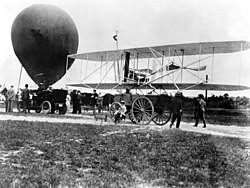
2. The Wright Brothers and the First Powered Flight (1903)
On December 17, 1903, Wilbur and Orville Wright achieved the world’s first successful powered, controlled, and sustained flight of a heavier‑than‑air aircraft at Kitty Hawk, North Carolina. Their aircraft, the Wright Flyer, made four brief flights, the longest lasting 59 seconds and covering 852 feet.
The Wright brothers’ success was due to their systematic approach to aerodynamics, wind‑tunnel testing, and the invention of effective three‑axis control. They used a simple stopwatch to time their historic flights, symbolizing the humble beginnings of aviation.
This achievement marked the birth of modern aviation and proved that powered flight was not only possible but controllable.
3. Early Passenger Flights and Commercial Beginnings (1913–1914)
3.1 Ilya Muromets – The First Large Passenger Aircraft
The Ilya Muromets, designed by Igor Sikorsky, first flew on December 10, 1913, in Russia. It was revolutionary for its time, featuring an enclosed cabin, multiple engines, and passenger comforts. On February 25, 1914, it carried 16 passengers on a demonstration flight, proving the feasibility of large passenger aircraft.
Between June 21 and June 23, 1914, the aircraft completed a round‑trip flight from Saint Petersburg to Kiev in 14 hours and 38 minutes, with one intermediate landing. This achievement demonstrated the potential of long‑distance passenger air travel.
3.2 The World’s First Scheduled Airline Flight
On January 1, 1914, Tony Jannus piloted the world’s first scheduled commercial airline flight for the St. Petersburg–Tampa Airboat Line in Florida, USA. The aircraft, a Benoist XIV flying boat, flew across Tampa Bay.
The passenger was a former mayor of St. Petersburg, who paid $400 for the historic journey and sat on a wooden bench in an open cockpit. Although the airline operated for only four months, it marked the beginning of scheduled commercial air services.
4. Aviation During and After World War I
World War I (1914–1918) accelerated aviation development. Aircraft evolved rapidly for reconnaissance, fighter combat, and bombing roles. Improvements in engines, airframes, and navigation emerged during this period.
After the war, surplus military aircraft and trained pilots became available for civilian use. Air mail services expanded, especially in the United States and Europe, helping establish regular air routes and supporting the growth of commercial airlines.
5. The Growth of Airlines and Airports (1919–1930s)
5.1 Formation of Early Airlines
In 1919, KLM (Koninklijke Luchtvaart Maatschappij) was established in the Netherlands, making it the world’s oldest airline still operating under its original name. KLM played a major role in connecting Europe with its colonies and international destinations.
QANTAS, founded in 1920 in Australia, later proclaimed itself the oldest airline in the English‑speaking world. It began operations in the Australian outback, overcoming vast distances and challenging terrain.
5.2 Development of Airports
College Park Airport (KCGS) in Maryland, USA, established in 1909, is the world’s oldest continuously operating airport. Wilbur Wright used the field to train U.S. Army military officers, highlighting the early military‑civil aviation connection.
Airports gradually evolved from open fields into organized facilities with runways, hangars, control towers, and passenger terminals.
6. Aircraft Innovation Between the Wars
The interwar period saw major advancements in aircraft design. All‑metal aircraft replaced wood‑and‑fabric structures. Enclosed cockpits, retractable landing gear, and more powerful engines improved safety and comfort.
Aircraft such as the Douglas DC‑3 revolutionized air travel in the 1930s by making airlines profitable without government subsidies. The DC‑3 offered reliability, range, and passenger comfort unmatched at the time.
7. India’s Aviation Beginnings – JRD Tata (1932)
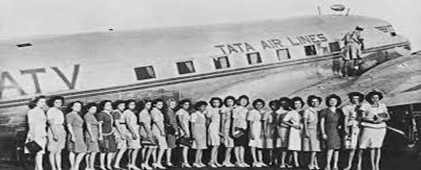
In 1932, Jehangir Ratanji Dadabhoy (JRD) Tata launched India’s first scheduled airline, Tata Airlines. He personally piloted the inaugural flight from Karachi to Mumbai via Ahmedabad in a single‑engine aircraft carrying airmail.
This historic flight marked the foundation of civil aviation in India. Tata Airlines later became Air India, the national carrier, playing a crucial role in connecting India domestically and internationally.
JRD Tata’s vision emphasized safety, professionalism, and service excellence, values that shaped Indian aviation for decades.
8. World War II and Its Impact on Aviation
World War II (1939–1945) further transformed aviation technology. Aircraft production reached unprecedented levels, and innovations included radar, pressurized cabins, jet engines, and long‑range bombers.
After the war, these technologies were adapted for civilian use, leading to faster, safer, and more efficient commercial aircraft.
9. The Jet Age and Modern Air Travel (1949–1950s)
The jet age began with the British de Havilland Comet, the world’s first purpose‑built jet airliner. It first flew in 1949 and entered commercial service in 1952. Although early design flaws caused setbacks, the Comet paved the way for future jet aircraft.
In the same period, the Avro Canada C102 Jetliner was developed but never entered production. However, the term “jetliner” became widely used to describe passenger jet aircraft.
By the late 1950s, jet aircraft began replacing piston‑engine airliners. Airlines offered unprecedented speed, comfort, and efficiency, fundamentally changing the air travel experience.
10. Expansion of Global Air Travel
As flying became more common, airlines expanded international networks. Improved navigation systems, air traffic control, and airport infrastructure supported higher traffic volumes.
Air travel shifted from a luxury for the wealthy to a mass transportation system accessible to the general public. Tourism, global trade, and cultural exchange increased significantly as a result.
SUMMARY TABLE
|
Aspect |
Global |
India |
|
Beginning |
1903 (Wright Brothers) |
1911 (Allahabad–Naini flight) |
|
Key Event |
1944 – ICAO formed |
1953 – Nationalisation |
|
Growth Phase |
1970s–1990s (Jet & low-cost airlines) |
1990s–present (Privatisation & UDAN) |
|
Current Status |
Connected world, 12+ billion passengers (2030 est.) |
3rd largest market, 150+ airports |
|
Challenges |
Fuel cost, environment |
Fuel tax, losses, infrastructure |
|
Future |
Sustainable aviation |
Global hub by 2030 |