
EMERGING TRENDS IN AVIATION
Introduction
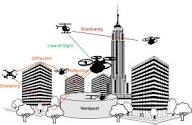
The aviation industry is undergoing a major transformation due to environmental concerns, rapid technological advancements, rising passenger expectations, and increasing competition. Traditional airline and airport models are evolving to become more sustainable, digital, cost-efficient, and innovative. Emerging trends such as sustainability, digitalisation, low-cost airline models, and urban air mobility (UAM) are reshaping how aviation operates today and how it will function in the future.
These trends aim to:
-
Reduce environmental impact
-
Improve operational efficiency
-
Enhance passenger experience
-
Lower operating costs
-
Support long-term growth and resilience
1. Sustainability in Aviation
Meaning of Sustainability
Sustainability in aviation refers to operating air transport in a way that minimizes environmental damage while ensuring economic and social responsibility. Aviation contributes nearly 2–3% of global CO₂ emissions, making sustainability a critical priority for governments, airlines, aircraft manufacturers, and airports.
The focus of sustainable aviation is on:
-
Reducing carbon emissions
-
Improving fuel efficiency
-
Minimizing noise pollution
-
Promoting responsible resource usage

Key Sustainability Practices in Aviation
1. Sustainable Aviation Fuel (SAF)
Sustainable Aviation Fuel is produced from renewable sources such as:
-
Used cooking oil
-
Agricultural waste
-
Algae
-
Municipal waste
SAF can be used in existing aircraft engines without major modifications.
Benefits:
-
Reduces carbon emissions by up to 80% over lifecycle
-
Compatible with current infrastructure
-
Supports circular economy
Challenges:
-
High production cost
-
Limited global availability
Example:
Airlines like Lufthansa, KLM, United Airlines, and Air India are gradually blending SAF with conventional jet fuel.
2. Fuel-Efficient Aircraft
Modern aircraft are designed using lightweight composite materials, advanced aerodynamics, and fuel-efficient engines.
Key Features:
-
Reduced aircraft weight
-
Improved wing design (winglets/sharklets)
-
Efficient turbofan engines
Examples:
-
Airbus A320neo
-
Boeing 787 Dreamliner
-
Airbus A350
Impact:
-
15–25% lower fuel consumption
-
Reduced emissions and operating cost
3. Carbon Offsetting Programs
Carbon offsetting allows passengers or airlines to compensate for emissions by funding environmental projects such as:
-
Tree plantation
-
Renewable energy projects
-
Wildlife conservation
How it Works:
-
Passenger pays a small additional amount
-
Airline invests in certified green projects
Limitation:
-
Does not eliminate emissions, only compensates
4. Electric and Hybrid Aircraft
Electric and hybrid aircraft aim to achieve zero or low emissions, especially for short-haul and regional routes.
Applications:
-
Short-distance travel
-
Training aircraft
-
Urban air mobility
Challenges:
-
Battery weight and range limitation
-
Certification and safety concerns
Examples:
-
Eviation Alice
-
Rolls-Royce electric aircraft programs
5. Optimized Flight Routes & Air Traffic Management
Advanced navigation systems reduce fuel burn by:
-
Avoiding congestion
-
Reducing holding time
-
Using direct routes
Technologies Used:
-
Performance-Based Navigation (PBN)
-
Satellite-based navigation (GNSS)
6. Green Airports
Green airports focus on sustainable infrastructure and operations.
Practices Include:
-
Solar power generation
-
Rainwater harvesting
-
Waste recycling
-
Energy-efficient terminal buildings
Examples:
-
Cochin International Airport (India) – world’s first fully solar-powered airport
-
Oslo Airport (Norway)
Importance of Sustainability
-
Meets global climate commitments
-
Reduces long-term operating costs
-
Improves airline brand image
-
Ensures regulatory compliance
-
Supports future aviation growth
2. Digitalisation in Aviation
Meaning of Digitalisation
Digitalisation refers to the use of advanced digital technologies to automate processes, improve safety, reduce costs, and enhance passenger experience. Aviation is increasingly becoming a data-driven industry.

Key Digital Trends in Aviation
1. Biometric Boarding
Biometric systems use face recognition, fingerprints, or iris scans to identify passengers.
Benefits:
-
Faster boarding
-
Reduced queues
-
Enhanced security
Example:
Biometric boarding at airports like Dubai, Singapore Changi, and Delhi IGI.
2. E-Gates & Self-Baggage Drop
Automated systems allow passengers to:
-
Print baggage tags
-
Drop bags without staff assistance
Impact:
-
Reduced manpower cost
-
Faster passenger processing
3. Mobile Apps & E-Tickets
Airlines use mobile apps for:
-
Booking tickets
-
Digital boarding passes
-
Flight updates
-
Ancillary purchases
Example:
IndiGo and Emirates apps provide complete travel management.
4. Artificial Intelligence (AI) & Chatbots
AI helps airlines in:
-
Customer support
-
Dynamic pricing
-
Demand forecasting
-
Fraud detection
Chatbots Provide:
-
24/7 assistance
-
Instant responses
-
Multilingual support
5. Predictive Maintenance
Sensors installed on aircraft monitor real-time performance data.
Advantages:
-
Predicts component failure
-
Reduces unscheduled maintenance
-
Improves safety
-
Saves cost
6. Internet of Things (IoT)
IoT connects systems like:
-
Smart baggage tracking
-
Aircraft health monitoring
-
Airport facility management
7. Digital Payments
Airlines accept:
-
UPI
-
Mobile wallets
-
QR codes
-
Contactless cards
Benefit:
-
Faster transactions
-
Reduced cash handling
Impact of Digitalisation
-
Improved efficiency
-
Enhanced passenger satisfaction
-
Lower operating costs
-
Better decision-making
-
Competitive advantage
3. Low-Cost Airline Models (LCCs)
Meaning of Low-Cost Carrier Model
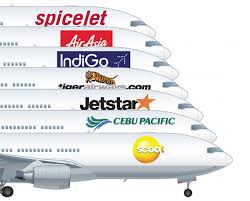
Low-cost carriers focus on affordable air travel by minimizing operational costs and offering basic services with optional add-ons.
Features of Low-Cost Airline Models
1. Single Aircraft Type
-
Reduces training and maintenance cost
-
Simplifies operations
2. Point-to-Point Network
-
No hub-and-spoke dependency
-
Faster aircraft turnaround
3. High Seat Density
-
More seats per aircraft
-
Lower cost per seat
4. No Free Meals
-
Buy-on-board system
-
Reduces catering cost
5. Fast Turnaround Time
-
Aircraft spends less time on ground
-
Higher aircraft utilization
6. Unbundled Services
-
Separate charges for:
-
Baggage
-
Seat selection
-
Meals
-
Priority boarding
-
7. Online-Only Booking
-
Reduced commission
-
Lower distribution cost
Examples of LCCs
-
IndiGo
-
Ryanair
-
AirAsia
-
Southwest Airlines
Advantages of LCC Model
-
Affordable travel for mass market
-
High aircraft utilization
-
Strong ancillary revenue
-
Efficient cost structure
Limitations of LCCs
-
Limited comfort
-
No interline connectivity
-
High dependency on volume
-
Vulnerable to fuel price rise
4. Urban Air Mobility (UAM)
Meaning of Urban Air Mobility
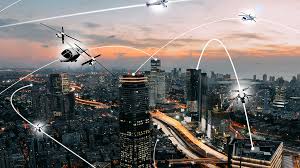
Urban Air Mobility refers to short-distance air transportation within or near cities using electric vertical take-off and landing (eVTOL) aircraft.
UAM aims to reduce:
-
Traffic congestion
-
Travel time
-
Urban pollution
Key Components of UAM
1. eVTOL Aircraft
-
Electric-powered
-
Vertical take-off and landing
-
Quiet and eco-friendly
2. Vertiports
-
Dedicated take-off and landing zones
-
Located on rooftops or city outskirts
3. Autonomous Flight Systems
-
AI-based navigation
-
Reduced pilot dependency
Applications of UAM
-
Air taxis
-
Emergency medical services
-
Cargo delivery
-
Disaster response
-
VIP transportation
Examples of UAM Projects
-
Joby Aviation
-
Volocopter
-
Lilium
-
Airbus CityAirbus
Advantages of UAM
-
Extremely fast urban travel
-
Reduced road congestion
-
Zero or low emissions
-
New employment opportunities
Challenges of UAM
-
Regulatory approval
-
Safety certification
-
Infrastructure development
-
High initial cost
-
Public acceptance
Future Outlook of Aviation
-
Sustainable fuels will become mandatory
-
Fully digital airports will be common
-
AI-driven airlines will dominate
-
Electric regional aircraft will emerge
-
Urban air mobility will transform city transport